 EN
EN  DE
DE 
The principles of classic contaminated site management
Responsibility for the soil and the future
Soils are irreplaceable - they support our infrastructure, store water and form the basis of healthy ecosystems.
However, many areas in Germany are contaminated by historical use. The Treatment of contaminated sites is therefore one of the central tasks of contemporary engineering and environmental planning.
The M&P Ingenieurgesellschaft Hannover - Member of the SIERA Alliance combines technical expertise with ecological responsibility. Our guiding principle:
Engineering for a Better Tomorrow.
What are suspected contaminated sites?
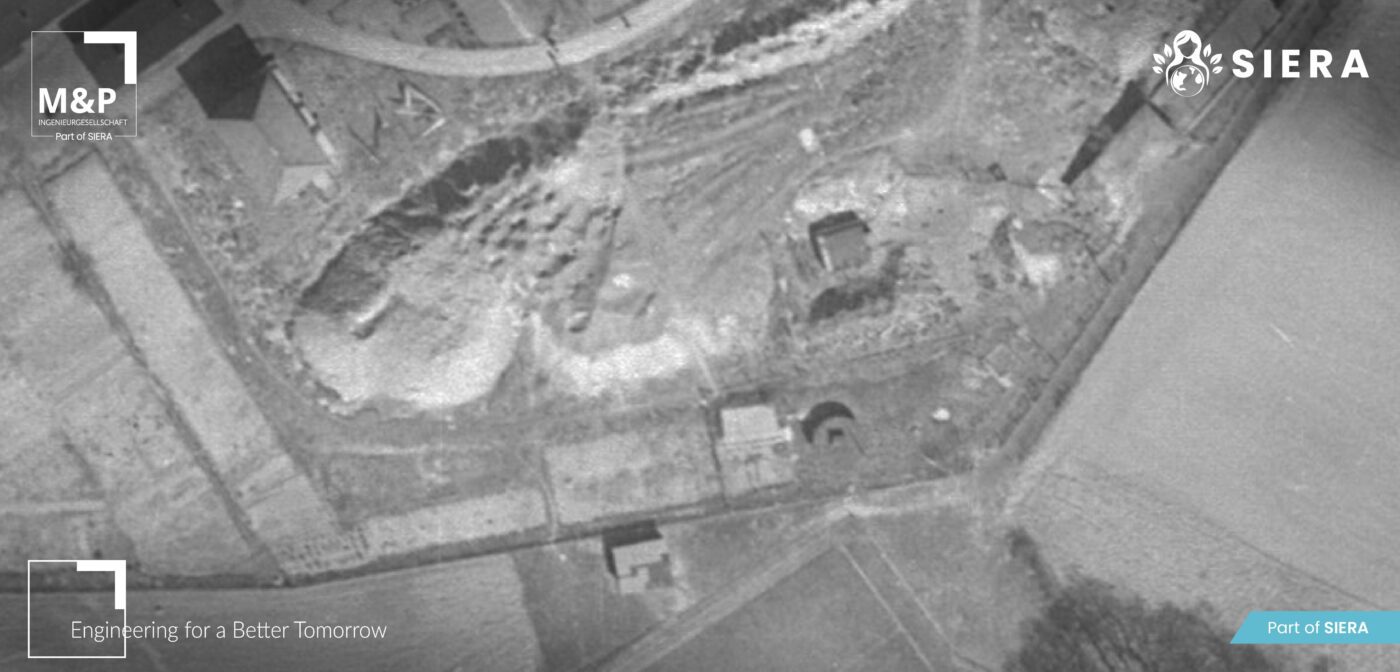
Numerous municipalities in Germany have derelict areas, which are referred to in technical jargon as Suspected contaminated sites are labelled. These are often former sand and gravel pits that were filled with unsorted waste after the Second World War until the 1970s - often known as „mayor dumps“ or „wild dumps“.
These sites harbour risks for people and the environment and are now systematically investigated, assessed and, if necessary, remediated.
Legal basis
The legal basis is formed by the Federal Soil Protection Act (BBodSchG, 1998) and the Federal Soil Protection and Contaminated Sites Ordinance (BBodSchV, 2021).
They regulate terms, obligations and limit values and provide the framework for a standardised nationwide approach.
This ensures that hazards are assessed transparently and remediation work is carried out in a legally compliant manner.
The four-stage process of contaminated site investigation
| Level | Designation | Goal | Methods | Result |
| 1 | Recording | Identify potential burdens | Trade registers, archives, aerial photographs | Initial assessment of the suspicion |
| 2 | Individual case research & orientating investigation | Narrow down actually suspicious areas | Historical analyses, soil and groundwater samples | Decision on detailed examination |
| 3 | Detailed investigation | Quantitative assessment of the load | Sampling, measurements, modelling | Risk assessment for humans, soil, water |
| 4 | Redevelopment planning | Develop a reorganisation concept | Objectives, procedure, costs and schedule | Basis for implementation |
This structured approach is the core of classic contaminated site management - scientifically sound, legally compliant and transparent.
Level 1 - Recording
This phase involves the systematic identification of all possible contaminated sites and old landfills.
M&P Nord Hannover analyses archives, commercial registers and historical aerial photographs. The result is an initial risk assessment and the creation of an area register.
Stage 2 - Individual case research and orientating investigation
Suspicious areas are analysed in more detail here:
2a - Historical research: Analysis of previous uses, accidents and eyewitness accounts.
2b - Orienting investigation: Initial soil and groundwater samples confirm or refute the suspicion.
This makes it possible to recognise at an early stage whether further investigations are necessary.
Stage 3 - Detailed investigation
The detailed analysis provides quantitative data on exposure.
M&P Nord uses targeted drilling and analytical methods to determine the spatial distribution of pollutants and assess their spread.
These results form the basis for remediation decisions and risk assessments.
Stage 4 - Remediation planning
If a risk is confirmed, a customised remediation concept is drawn up.
These include:
- Definition of the reorganisation goals
- Selection of suitable technical processes (e.g. soil replacement, in-situ cleaning)
- Coordination with authorities and owners
- Time and cost planning
The aim is to restore the area in an economically and ecologically sensible way.
Practical example from Lower Saxony
On behalf of a rural district in Lower Saxony M&P Nord - Member of the SIERA Alliance current Historical explorations and orientating investigations on nine suspected contaminated sites.
The uses range from residential areas and sports grounds to a quarry that was shut down almost 100 years ago.
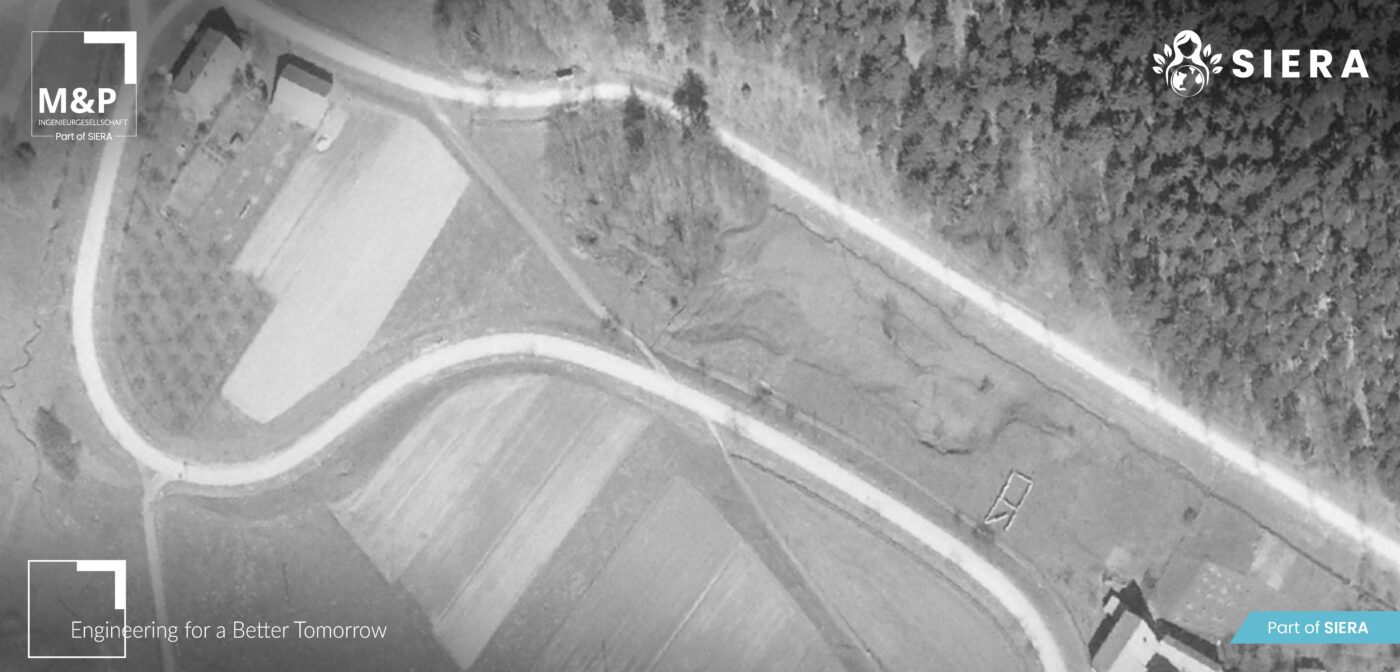
By analysing historical aerial photographs, morphological changes such as terrain depressions and mounds of production waste were identified and checked by means of small pile-drilling.
This provides a detailed picture of the subsurface conditions - an important basis for further assessments and, if necessary, remediation measures.
Modern technology complements traditional methods
M&P Nord uses new tools to make exploration work even more precise:
- GIS-supported data analysis
- Drone-based aerial photography
- 3D drilling data models
- Geostatistical analyses
These methods shorten project lead times and increase data quality - an example of sustainable engineering practice in the sense of Engineering for a Better Tomorrow.
Sustainability and social responsibility
Contaminated site management contributes to the circular economy.
Every redeveloped area opens up new opportunities for housing, business or nature conservation and helps to reduce land consumption.
Contaminated site management is therefore environmental protection and site development at the same time.
Conclusion
Classic contaminated site management offers a proven, structured framework for the assessment and remediation of contaminated soils.
M&P Ingenieurgesellschaft Hannover - Member of the SIERA Alliance stands for professional excellence, transparent communication and sustainable solutions.
With every project, we help to protect the soil and groundwater - and thus preserve our livelihoods for future generations.
Call to Action
Find out more about our projects and services in the field of contaminated site management on our website:
M&P North Hanover
Or contact us directly - our experts will be happy to advise you on the investigation, assessment and remediation of contaminated sites.